Letters Across the Indus
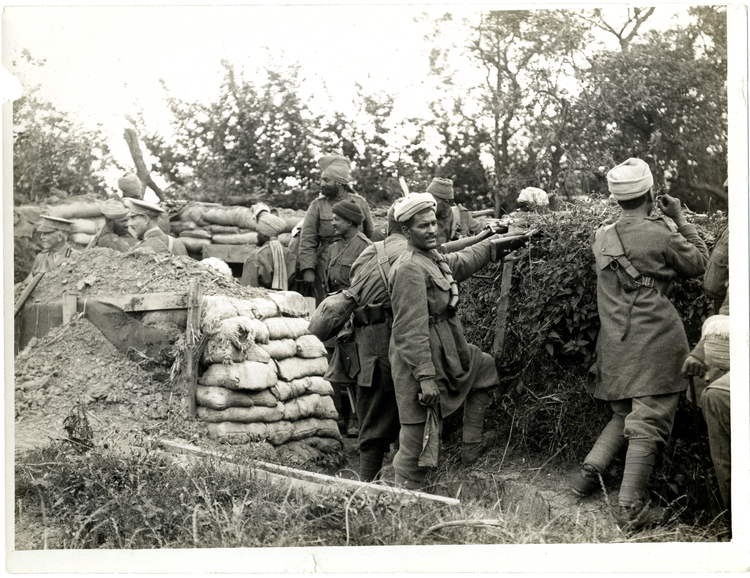
My beloved Priya,
I write this letter with a hand that trembles, not from fear but from hunger. We have been surrounded in this ancient city for four months now. The river is still here — the Tigris, the great river of Babylon — but the food is gone. We eat the horses. We eat the mules. We grind grain into dust and make a paste that fills the belly but not the soul.
The sahibs say the relief force is coming. They have said this for weeks. I look east every morning and see only the sun rising over the desert. The very earth remembers its children here, Priya. This is the land of two rivers, of ancient kings and prophets. Abraham walked here. The gardens of Babylon were here. And here we sit, men from the hills of Kumaon, dying in a land that does not know our names.
I think of the Ganges every day. Of the snow on Nanda Devi, the peak I could see from our village when I was a boy. I think of the sound of the river after the monsoon, and the smell of the earth when the first rain hits the dry ground. I think of you carrying water from the well, the way you balanced the pot on your head and walked so straight and proud.
Tell Arjun — our son — tell him his father loved him. I have not seen his face for so long that I have to close my eyes to remember it. If I do not return, name the next one after me. Amar. Let the name live on.
मैं तुमसे कभी अलग नहीं हुआ। मेरी आत्मा हर रात पूरब की ओर तुम्हारे पास उड़ती है। जब तक यह शरीर धूल में मिल न जाए, तब तक मेरा प्यार तुम्हारे साथ रहेगा।
(I have never truly left you. My soul flies east to you every night. Until this body returns to dust, my love will remain with you.)
We are camped near the ruins of an ancient city. The men say it was here that the great king Nebuchadnezzar walked. The soil is black and rich, older than anything I have ever seen. I scooped a handful of it today and let it run through my fingers. It felt like home. All earth is the same earth, Priya. All soil holds the bones of those who loved and were loved.
Do not weep for me. If I die here, I die fighting for my people, for my regiment, for the honour of the Dogras. I die with your name on my lips.
Yours always, across every river and every mountain, Amar
Written in Hindi in a neat, soldierly hand on a page torn from an army-issue notebook. The paper is water-stained and brittle. The letter was recovered by British forces when Kut was retaken in February 1917. It bears the War Office archive stamp from 2002.
What Happened
Aftermath
Historical Context
Timeline
Britain declares war. India, as a British colony, is automatically at war. The Indian Army mobilises.
Amar receives his mobilisation order. He leaves his village in Kumaon for the first time in his life.
Amar's regiment, the 39th Dogras, arrives in Basra, Mesopotamia.
The Siege of Kut begins. The garrison is surrounded by Ottoman forces.
Amar writes this letter. Food has run out. Men are eating grass and boiled boots.
Kut surrenders. 13,000 Allied soldiers become prisoners of war.
The death march begins. Prisoners are marched north toward Anatolia without food or water.
Amar dies of starvation and disease during the march. He is buried in an unmarked grave.
British forces retake Kut. Amar's letter is found among the debris.
The letter is catalogued at the British Library, India Office Records.
Amar's great-grandson discovers the letter and publishes it.
Origin
More from World War I
I Never Got to Say Goodbye
Henri wrote to his wife Marie from the hell of Verdun, describing a daughter he had never seen. The letter fell from his pocket as he died. A German soldier kept it for ninety years before it was returned to Henri's granddaughter.
Henri Dubois → Marie Dubois
My Darling Zen
Frederick Key wrote 42 letters and 15 postcards to his beloved Zen Hall. This was his last — written on Valentine's Day 1916. He died on the first day of the Somme. She wrote in her diary: 'Letter came saying my darling killed... went to Lichfield.'
Frederick Key → Zen Hall
The Russian Snow
A Russian Imperial Army officer writes to his wife during the Brusilov Offensive, describing the snow on the Carpathians and the cherry blossoms of their orchard. He was killed by shellfire four days later.
Dmitri Volkov → Natasha Volkov