The Australian Jungle
My dearest Irene,
I’ve been walking about three feet above the deck ever since I got the news. A son! A little Digger! I told the whole platoon and they bought me a round of tea (which is the only thing we’ve got to drink in this godforsaken place, so it meant the world). Sergeant Mulvaney said he looks just like me in the photo — a bit better looking, he added, because the missus did the developing. I want to believe him. I want to believe Douglas has my chin and your eyes and your smile and your stubbornness and everything good in both of us.
I’ve drawn him, you know. From the photograph you sent. The paper is getting worn from being folded and unfolded so many times, but I don’t care. I trace his tiny nose with my finger and I imagine what he smells like — milk and powder and that indefinable baby scent that everyone talks about and no one can describe. I try to imagine the sound of his cry. I try to imagine the weight of him in my arms. I’ve calculated it, Irene. I’ve been gone 332 days. If he grows an inch a month, he’s already eleven inches taller than when I left. He’s a different baby to the one I’ve been imagining. I’m a stranger to him. That thought is the hardest thing I’ve carried in this war.
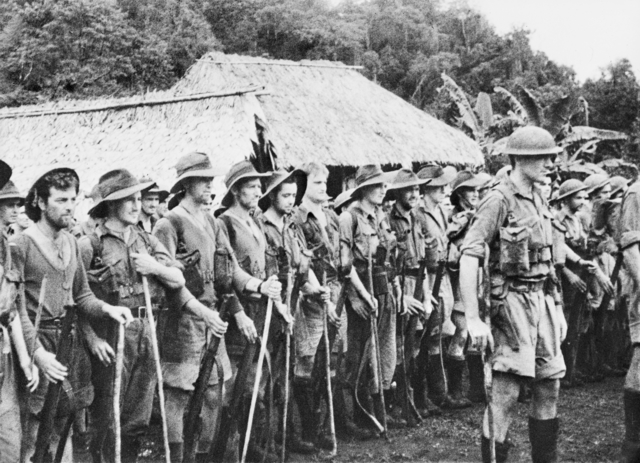
The jungle is a living thing. It breathes. It sweats. It makes noises all night — creatures I’ve never seen, sounds I’ve never heard. The heat is unbearable. We are drenched before we finish breakfast, and breakfast is usually a biscuit and a cup of tea that tastes of smoke. The leeches are everywhere. You pull them off your legs and they leave small wounds that weep for days. The men have stopped counting. We measure time now not in days but in the number of leeches we’ve removed. Bad day: fifty. Good day: ten.
But I don’t want to complain. I chose this. I chose to serve my country, to fight for the world we want Douglas to grow up in. A world where he doesn’t have to worry about leeches or jungles or war. A world where he can be a boy, then a man, then a father — and none of it interrupted by the madness of nations.
I dream of you every night. Not in a grand romantic way — just in the ordinary details. I dream of your cooking, the way you would hum in the kitchen, off-key, making up lyrics to songs you didn’t quite know. I dream of your laugh, that wonderful snorting sound you made when something really struck you. I dream of the way you snore — just a little, just enough. I never told you that I loved listening to you snore. It meant you were there, beside me, safe.
Tell Douglas his father loved him before he ever heard his name. Tell him I died trying to help a mate. That’s what we do. That’s who we are. We are Australians. We don’t leave anyone behind. We carry our wounded through the jungle even when the bullets are singing around our ears. We cover our mates with our own bodies if we have to. That’s what I did, and if that’s what kills me, then that’s a death I can live with.
But I don’t plan on dying, Irene. I plan on coming home and holding my son and kissing my wife and sitting on the porch of our house on a Sunday afternoon with a cold beer and nothing to do except watch the world go by. I plan on being a father. I plan on being a husband. I plan on growing old and grey and complaining about my knees.
Tell Douglas I’m coming home. Tell him his father is on his way.
All my love, always, Colin
P.S. — I’ve enclosed a sketch of the jungle sunrise. It’s not very good, but I wanted you to see what I see when I think of beauty in this place. The colours are wrong — I only have a pencil — but the feeling is right. The world is still beautiful, even here.
What Happened
Aftermath
Historical Context
Timeline
Australia declares war on Japan. Colin enlists in the Australian Imperial Force.
Colin and Irene marry in Newcastle. They have two weeks together before he ships out.
Douglas Simper is born. Colin receives the news by telegram while training in Queensland.
Colin deploys to Borneo with the 26th Brigade Group.
Colin writes his last letter to Irene. He tells her about Douglas, the jungle, the leeches.
Colin is shot while recovering a wounded soldier. He saves the man's life.
Colin dies of his wounds in a field hospital. He is 26 years old.
Irene receives the telegram. She does not open it for three hours.
Irene donates the letters to the Australian War Memorial on Anzac Day.
Irene dies at 82. She is buried with Colin's photograph and his last letter.
Origin
More from World War II
The Cherry Blossom Winds
A kamikaze pilot's final letter to his young wife, written the day before his mission. The letter is composed in careful calligraphy and includes a death poem.
Lieutenant Kenji Yamamoto → Yuki Yamamoto
The Submarine Man
A submarine communications officer writes to his wife about their newborn son — whom he has never seen. His submarine was sunk 25 days later. All hands lost.
Harold 'Hal' Jensen → Rae Jensen
The Filipino Love Letter
Captain Miguel Santos of the Filipino Scouts wrote to his wife Maria on the eve of Bataan's fall. He survived the Death March but died in a POW camp. The letter was carried by a fellow prisoner and delivered to Maria in 1945.
Miguel Santos → Maria Santos