The Professor's Letters
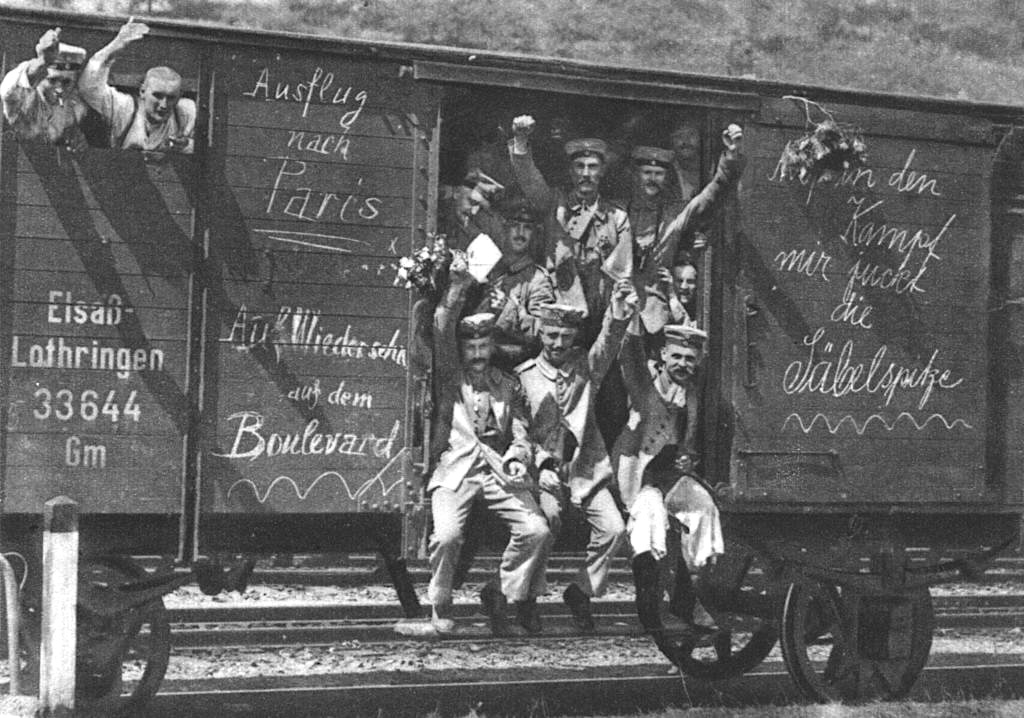
Meine liebste Elfriede,
I am sitting in a barn that smells of cattle and damp straw, writing by the light of a candle that a dying soldier gave me two hours ago. He will not need it anymore. He was eighteen years old — a student from Berlin who had planned to study law. He asked me if I thought the Greeks had ever fought in trenches. I told him no. I told him that the Greeks fought in the open, under the sun, with spears and shields, and that their wars were decided in hours, not years. He nodded, as if I had given him some great comfort. Perhaps I had. Perhaps there is comfort in knowing that what we are doing here has no precedent, no classical parallel, no language in any of the ancient tongues I have spent my life studying.
I have taught the classics all my life, Elfriede. I have stood before lecture halls of young men and women, reading aloud from the Iliad, describing the glory of Troy, the courage of Hector, the rage of Achilles. I told my students that Homer understood war — its horror and its heroism, its beauty and its brutality. I was wrong. Homer never fought in a trench. Homer never watched a boy die in the mud with his entrails spilling out, calling for his mother in a language that sounds like prayer. There is no glory here, Elfriede. There is only mud and the sound of boys crying for their mothers, and the constant, grinding thunder of the guns that never stop.
I think now of the passage in the Iliad where Hector says goodbye to Andromache. I used to read it to my students with such passion — the doomed hero, the loving wife, the infant son who would be thrown from the walls of Troy. I thought I understood it. I thought I understood the nobility of a man who fights for his city, knowing he will die. But I understand it differently now. Hector was not noble because he fought. He was noble because he loved. Because he held his son in his arms and prayed that the boy would be a better man than his father. Because he looked at Andromache and told her, “Dear one, do not grieve for me too much.” That is what I want you to know, Elfriede. Dear one, do not grieve for me too much.
Do you remember the evening we first read Rilke together? It was in our apartment in Heidelberg, the fire burning low, the snow falling outside the window. You read aloud from the Duino Elegies, and your voice trembled on the line about beauty being nothing but the beginning of terror we are still just able to bear. I looked at you, and I thought: this is the woman I will love for the rest of my life. I thought: whatever else happens, whatever wars come, whatever the world becomes, I have had this — an evening of poetry and firelight and love. And it is enough.
If you must remember me, remember me not as a soldier, but as the man who read Rilke to you by the fire. That was the real me. This uniform is a costume I am wearing toward my death. It is not who I am. I am the man who spent a lifetime learning Greek so he could read Plato in the original. I am the man who wept at the end of Faust. I am the man who held your hand in the delivery room when our daughter was born — the daughter you told me we were expecting in your last letter, the daughter I will never see. That is who I am. Not this. Not a soldier in a foreign field, waiting for a bullet that will bear no grudges and ask no questions.
The guns have begun again. The men are forming up. The officers are shouting. There is a strange quiet in me, Elfriede. A stillness. I think it is the knowledge that I have lived a full life — not long, but full. I have known love. I have known the life of the mind. I have known the joy of teaching, of sharing the great works of the human spirit with young people who are hungry for meaning. I have known you. And if I die in the next hour, I will die knowing that I was lucky beyond all reason.
Kiss our daughter for me. Tell her that her father was not a hero. Tell her he was a man who loved books, who loved her mother, and who tried — in his small, imperfect way — to make the world a little wiser, a little kinder.
Tell her that her father read Rilke by the fire, and that he believed, to the very end, in the power of words to transcend the brutality of the world.
If there is a heaven, I believe it is a library, and you are sitting in it, waiting for me.
Deine, Johannes
What Happened
Aftermath
Historical Context
Timeline
Germany mobilizes for war. Johannes Richter, a professor of classical literature at Heidelberg University, volunteers for military service.
Johannes writes his first letter to Elfriede from training camp. He jokes about a classics professor learning to march in straight lines.
The 121st Reserve Regiment is deployed to Flanders. Johannes marches through Belgium.
Johannes writes this letter, his last, two days before the attack. He meditates on Homer, war, and love.
Johannes is killed at Langemarck, part of the wave of German student volunteers cut down by machine-gun fire.
Elfriede publishes "Briefe aus Flandern" (Letters from Flanders). It is praised for its literary and historical value.
The Nazi regime bans and burns "Briefe aus Flandern." Elfriede hides a single copy in the lining of her coat.
A Heidelberg graduate student discovers a copy of the book in the university archive. It is republished in 2000.
Origin
More from World War I
The Last Night Before the War
A French farmer conscripted in August 1914 writes to his wife of two months on the eve of the First Battle of the Marne. He died the next day.
Antoine Roussel → Colette Roussel
The Belgian Last Stand
A Belgian soldier writes to his wife from the Yser River, describing the desperate flooding of the land to stop the German advance. 'We are drowning our country to save it.' He died three days later.
Pieter Van Der Waals → Liesbeth Van Der Waals
The Christmas Truce Letter
A German theology student writes to a woman he has never met — falling in love with her photograph during the Christmas Truce of 1914. The letter was found in his kit after he was killed.
Klaus Weber → Alice