The Resistance Courier
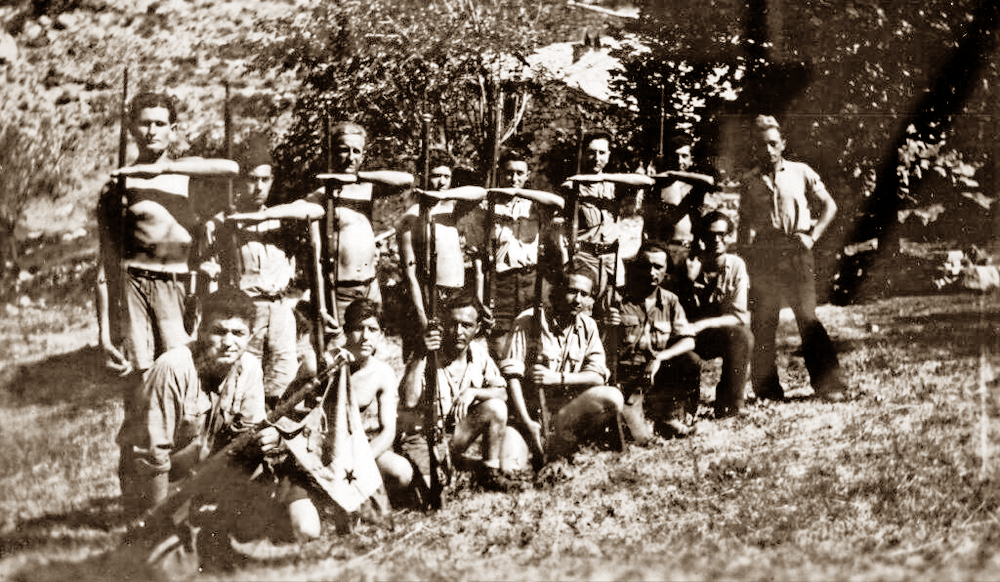
Ma Céleste,
I am writing this in a cell with a single window, high up, where I can see a patch of sky. It is blue today. I have been watching it change color from dawn to dusk, the way I used to watch the light move across your face when we lay in bed on Sunday mornings. I am trying to memorize the blue of it. There is not much else to do here.
They came for me three days ago. I was carrying messages for the network — nothing that would lead back to anyone important. I swallowed the cipher before they could take it. It tasted like paper and ink and fear. But I did not break. I want you to know that. I told them nothing. Your name never passed my lips.
The guard who brings my bread is an Austrian named Karl. He has a wife and children in Graz. He showed me their photograph last night — a woman with kind eyes and two little girls in braids. He cried. I do not think he wants to be here. I do not think any of us wants to be here. He has agreed to take this letter for me. I am hiding it in my shoe as I write. He will take it to the woman at the café on Rue de la République. She will know what to do.
I loved you in the sunlight of Lyon. I loved you in the rain. I will love you in whatever comes next.
Do you remember the afternoon we spent on the hill of Fourvière? We sat on the steps of the basilica and looked down at the city spread beneath us like a map. You said Lyon looked like a heart — the two rivers meeting, the old town cradled between them. “We are standing on the heart of France,” you said. And I thought: No, I am standing beside the heart of my life.
The chestnut trees are blooming early this year.
Do not mourn me too long. There is work to do. You know what I mean. The fight is not over — it has barely begun. I will be with you every time you walk a message across town, every time you whisper a password, every time you look over your shoulder and keep walking anyway. I will be the warmth at your back.
I wanted to give you children. I wanted to grow old with you. I wanted to sit on the terrace of a café and argue about whether the wine was good enough. All of that is still possible for you, even if not with me. Live, Céleste. Live and fight and win. And when this is over — when the world is safe again — live a life so full that it includes everything we planned.
Tell my mother I love her. Tell my father I was not afraid.
I am not afraid. I have you. I had you. That is enough for any man.
Je t’aime. Je t’aime. Je t’aime.
Yours, across every distance, Étienne
P.S. — The chestnut trees are blooming early this year. Stay safe.
What Happened
Aftermath
Historical Context
Timeline
Germany occupies Vichy France. Étienne joins the Resistance. He is 21.
Étienne and Céleste marry in a secret ceremony in a safe house. No photographs, no rings.
Étienne is captured by the Gestapo while carrying coded messages.
Étienne writes his final letter in Montluc Prison. The guard Karl Weber smuggles it out.
Étienne is executed by firing squad at dawn. Age 22.
Céleste receives the letter. She continues her Resistance work.
Liberation of Lyon. Céleste is in the crowd.
Céleste dies at 87. The letter is read at her funeral.
Origin
More from World War II
In the Shadows of Lyon
A French resistance doctor writes to his wife from hiding in Lyon, having just treated a hidden Jewish child. The letter was smuggled out and hidden in a hollow book.
Dr. Antoine Lefèvre → Madeleine Lefèvre
From the Rubble
Smuggled out of the burning Warsaw Ghetto during the uprising, this letter was written by an 18-year-old Jewish fighter to his younger sister — the only surviving member of their family.
David (Dawid) Lerner → Rachel Lerner
The Dutch Nurse
A Dutch nurse betrayed for helping Allied airmen wrote this letter from her prison cell. She bribed a guard to smuggle it out. He kept it for 50 years before returning it to her family.
Liesbeth van der Meer → Pieter van der Meer