The Cliffs of Gallipoli
Dear Mary,
Well, here I am in Turkey. Funny to write that, isn’t it? Turkey. A place I never thought I’d see in all my born days.
We landed a week ago, on the twenty-fifth. They told us it’d be a quick dash up the peninsula — a few weeks, maybe a month, then home by Christmas. The papers said it would be a grand adventure. The papers are a lot of bloody liars, if you’ll pardon my French.
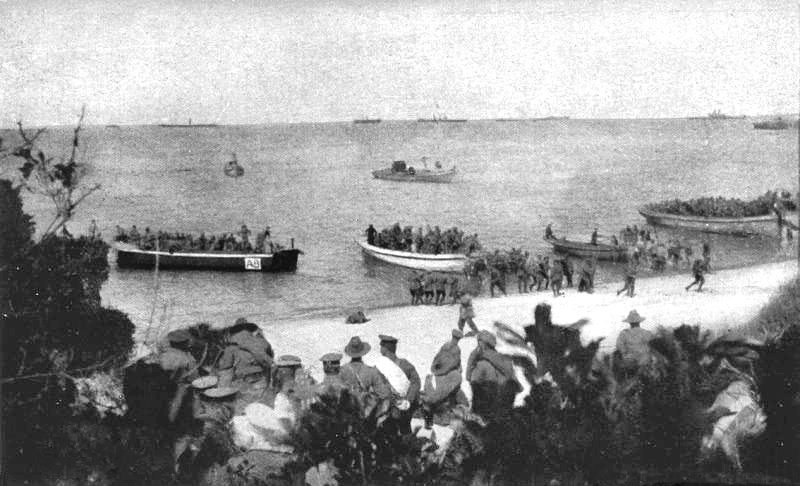
The landing was chaos proper. The boats dropped us in the wrong spot — supposed to be a beach, ended up at cliffs. Steep, razor-backed cliffs with Turkish boys up the top shooting down at us like we were fish in a barrel. Men were falling before they even hit the sand. I saw a cobber next to me take a bullet right through his water bottle, didn’t even slow down, just kept running. Mad bastard. We’re all mad bastards, I reckon. That’s what it takes to go up these hills.
We’re dug in now, living in holes in the ground like rabbits. The flies — Mary, you would not believe the flies. They’re on everything. The food, the dead, the living. They crawl into your mouth while you’re trying to sleep. The heat during the day is shocking, and the nights are cold enough to freeze your bones. The latrine is a tin can you toss over the side. It’s not the adventure they painted in the recruitment posters, I’ll tell you that straight.
But here’s the thing, Mare — the sunsets. You wouldn’t credit it. The sun sets over the Aegean and the whole sky turns the colour of a blood orange. For ten minutes, you could almost forget where you are. Almost.
I think of home constantly. Of you and Mum and Dad. Of the smell of the bakery on Smith Street in the morning. Of the sound of the trams rattling past. I’d give my left arm for a proper meat pie. Or a beer. God, a cold beer.
Don’t worry about me. I’m a dinkum Aussie, tough as nails. The Turks are brave fighters — I’ll give ‘em that — but we’re holding our ground. The boys are good. Real good. We look out for each other.
I’ve got to go. The censor’s already crossed out half of what I wrote. If this letter reaches you, know that I’m thinking of you always. I’ll bring you a Turkish rug when this is all over — the ones they weave here are bonzer.
Your loving brother, Jack
P.S. — Tell Mum not to send any more socks. I’ve got six pairs and nowhere to put ‘em.
The letter is written in pencil on two sheets of field service paper. The lower half of the second page is torn away — likely removed by the censor. Jack's handwriting is rushed but legible, with ink stains at the edges.
What Happened
Aftermath
Historical Context
Timeline
Britain declares war. Jack enlists in the 1st Division, AIF, at Victoria Barracks, Melbourne.
The first convoy of Australian troops sails from Albany, Western Australia.
The ANZACs land at Gallipoli at dawn. Jack's boat comes under fire before it reaches the beach.
Jack writes this letter from a dugout on the cliffs above Anzac Cove.
Jack is evacuated with dysentery, emaciated and feverish. He weighs less than eight stone.
The Battle of Fromelles. Jack's battalion loses 60% of its men in a single night.
Armistice. Jack is in a hospital in Rouen, recovering from a wound to his left thigh.
Jack arrives back at Port Melbourne. Mary is waiting on the pier.
Jack dies in his sleep, aged 85. The biscuit tin of letters passes to Mary.
Origin
More from World War I
For This Soil, For Home
Sergeant Mehmet writes to his wife on the night of May 19, 1915 — the day of the great Turkish counterattack at Anzac Cove. He speaks of Kemal, the enemy ships on the sea, and the wheat fields of home he will not see again.
Mehmet Çavuş → Ayşe Hanım
If I Should Fall
A French soldier's letter to his sweetheart, written before the Second Battle of Ypres. Jean-Luc was a poet before the war.
Jean-Luc Moreau → Claire Dubois
The French Jewish Soldier
A French soldier of Jewish faith from Alsace writes to his wife on the morning of the Second Battle of Artois, blending French and Hebrew in his final farewell.
David Lévy → Rachel Lévy