The Moon Over Changsha
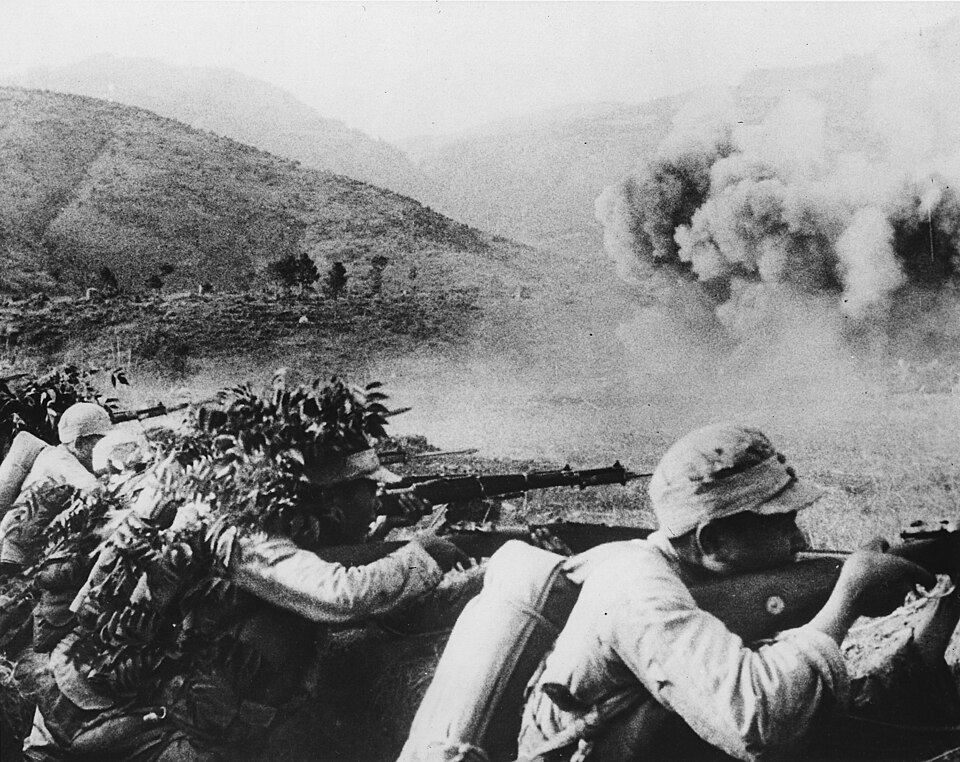
My beloved Mei,
I am writing this by the light of the moon, on a piece of scrap paper that once wrapped our rations. The Japanese are on the other side of the river. I can hear their voices carried across the water, a language I do not understand but whose intent I know perfectly.
The Xiang River is red again. It has been red for three days now. The rains came yesterday and washed some of it clean, but by evening it was red once more. I have stopped counting the bodies. There is a number beyond which counting becomes a kind of madness, and I have passed it.
This morning they shot a deserter. He was seventeen years old, from a village not far from my own. He ran when the Japanese came through with flamethrowers. I do not blame him. I wanted to run too. But something held me here. Maybe it was your face. Maybe it was the memory of my father telling me about the 1911 Revolution, about the old China that died so a new one could be born. Maybe it was just shame. I don’t know anymore.
The war is devouring our souls, Mei. I feel pieces of myself vanishing. The part that laughed easily. The part that believed in tomorrow. The part that could sleep through the night without dreaming of fire. They are gone, one by one. But the part that loves you remains. That part is made of iron.
The Japanese say China will break like a teacup. They do not understand us. A teacap can be mended with gold lacquer and become more beautiful than before. And our nation is not a cup at all. We are the river. Cut us, and we flow around you. Burn us, and we rise as mist and fall as rain. We have been here for five thousand years. We will be here when they are dust.
I want a son, Mei. I know this is a strange thing to write, here, in this place, with death all around me. But I want a son to whom I can teach the old poems. I want a daughter with your eyes. I want to grow old in a house that has walls of stone, not of fear.
If I die tomorrow — and I think I will, the morning attack will be fierce — do not mourn me too long. I have lived a full life because I knew your love. That is enough for any man.
If I die, my bones will become part of China’s earth. That is not a tragedy. That is a promise.
Your husband, Liang Weiguo
如果我死了,我的骨頭將成為中國大地的一部分。這不是悲劇,而是承諾。
如果我死了,我的骨頭將成為中國大地的一部分。這不是悲劇,而是承諾。
Liang Weiguo was born in 1916 in Sichuan Province, the son of poor farmers. He had only two years of formal schooling before joining the army at 17, but he learned to read and write from a company scribe during training, practicing by copying out the Confucian classics by candlelight. He rose to sergeant through battlefield experience, not education. His letters are noted for their unpolished but deeply vivid descriptions of war. He carried a worn copy of the Art of War and a dried flower from his wedding day in his pack.
What Happened
Aftermath
Historical Context
Timeline
The Marco Polo Bridge Incident. The Second Sino-Japanese War begins. Liang enlists in the National Revolutionary Army.
Liang marries Lin Mei in a small ceremony in Chongqing. They have three days together before he marches east.
Liang fights in the First Battle of Changsha. He is wounded in the shoulder but survives.
The Second Battle of Changsha. Liang's unit is decimated. He is promoted to sergeant for bravery.
The Third Battle of Changsha begins. Japanese forces cross the Miluo River.
Liang writes this letter by moonlight on scrap paper. He knows the morning counterattack will be his last.
Liang is killed by machine-gun fire while holding the bridge approach. Changsha is secured by Chinese forces on January 15.
Lin Mei receives the letter, delivered by a soldier who walked 600 miles from Hunan to Chongqing.
The letter is published in 'Letters from the Storms: Chinese Voices from the War of Resistance 1937-1945' on the 70th anniversary of the war's end.
Origin
More from World War II
The Volga Remembers
An unsent letter found among Lieutenant Dmitri Volkov's belongings after he was killed at the Red October factory. He writes by the light of a burning building as the Battle of Stalingrad rages around him.
Lieutenant Dmitri Volkov → Natasha Volkov
The Filipino Love Letter
Captain Miguel Santos of the Filipino Scouts wrote to his wife Maria on the eve of Bataan's fall. He survived the Death March but died in a POW camp. The letter was carried by a fellow prisoner and delivered to Maria in 1945.
Miguel Santos → Maria Santos
The Diary That Never Stopped
After her RAF pilot husband was shot down over France, Doreen Wright wrote him a letter every single day for three years — 1,095 letters — even after she knew he was dead. None were ever mailed.
Doreen Wright → Gilbert Wright