The Volga Remembers
My beloved Natasha,
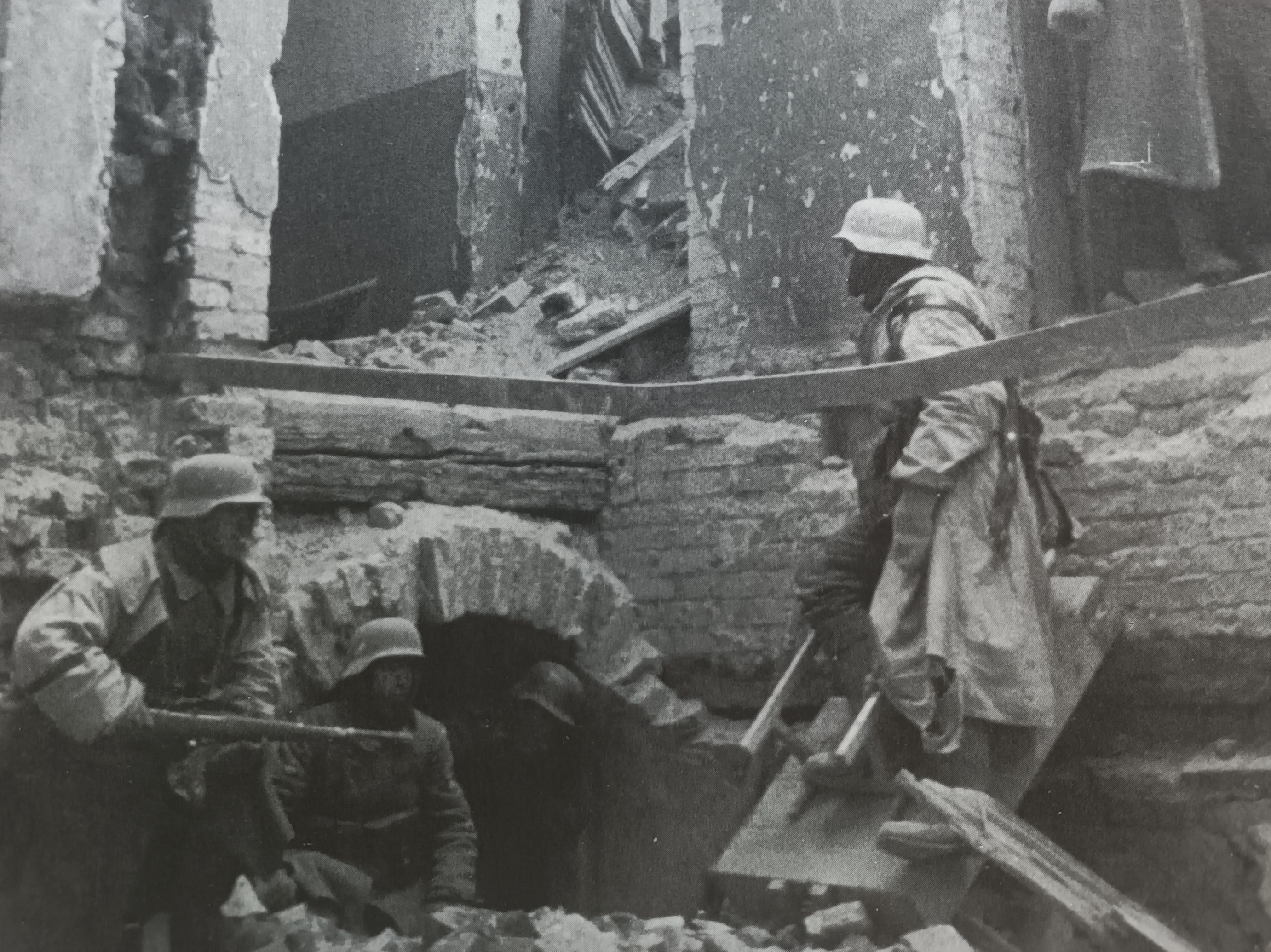
I am writing this by the light of a burning building. The city is on fire around us, and the glow is so bright that I can see my own hands as if it were noon. The Volga is behind us — grey, cold, the only way out, and the German planes are over it constantly. The ferries cross at night, when the moon hides. Men die on those boats. But men also arrive, and that is something.
Stalingrad is no longer a city. It is a pile of bricks and broken glass and frozen bodies. Every basement holds someone — civilians, dead or alive. I passed a child today sitting on a pile of rubble, holding a doll. She was not crying. There are no tears left in this place.
The Germans grind through the streets with their tanks. We are shadows with rifles, living among the ruins. We fire from holes in walls, from sewers, from the skeletons of apartments. A man can be alive at dawn and gone by noon. My friend Yuri was eating bread beside me yesterday. A moment later, nothing but a wall where his head had been.
I try not to think of our dacha. Of the apple trees. Of your laugh, Natasha — that low, warm laugh you have when I say something foolish. I try not to think because thinking makes me weak, and weakness here means death.
But I will let myself think of you now, just for this letter. I remember your hands kneading dough on Sunday mornings. The way you hummed while you worked. The freckle behind your left ear.
If I don’t make it, know that I died standing. Russia will never fall. Not because of our generals, not because of our tanks, but because of children like the one I saw today who still holds her doll. Because of men like Yuri who ate bread and died and whose last word was “Mama.”
I have to go. The Germans are shelling the factory again.
If I could hold you one more time, I would never let go.
Your Dmitri
Если я не вернусь, знай — я умер стоя. Россия никогда не падет.
Если я не вернусь, знай — я умер стоя. Россия никогда не падет.
Dmitri Volkov was born 1918 in Saratov, a Volga River town. Before the war he was a schoolteacher and amateur poet. He volunteered for the front in August 1941, refusing a safe position training new recruits. By Stalingrad, he was among the most experienced soldiers in his unit. His men called him 'Uchitel' — Teacher — because he reviewed their letters home for grammar mistakes.
What Happened
Aftermath
Historical Context
Timeline
Operation Barbarossa begins. Dmitri is conscripted into the Red Army.
German 6th Army reaches Stalingrad. The bombing begins.
Dmitri is ferried across the Volga into the burning city. Assigned to 284th Rifle Division.
Dmitri writes this letter by the light of a burning building near the Red October factory.
Dmitri is killed by a German machine-gun while crossing a workshop floor.
Operation Uranus begins. Soviet counter-offensive encircles the German 6th Army.
German 6th Army surrenders at Stalingrad.
Natasha receives the letter from Dmitri's fellow soldier.
Origin
More from World War II
The Moon Over Changsha
Found in the lining of a sergeant's cap after he fell defending the bridge approach at Changsha. He wrote this by moonlight on scrap paper, knowing he would not see the morning.
Sergeant Liang Weiguo → Lin Mei
The Russian Snow
A Russian Imperial Army officer writes to his wife during the Brusilov Offensive, describing the snow on the Carpathians and the cherry blossoms of their orchard. He was killed by shellfire four days later.
Dmitri Volkov → Natasha Volkov
The Diary That Never Stopped
After her RAF pilot husband was shot down over France, Doreen Wright wrote him a letter every single day for three years — 1,095 letters — even after she knew he was dead. None were ever mailed.
Doreen Wright → Gilbert Wright