Above the Clouds
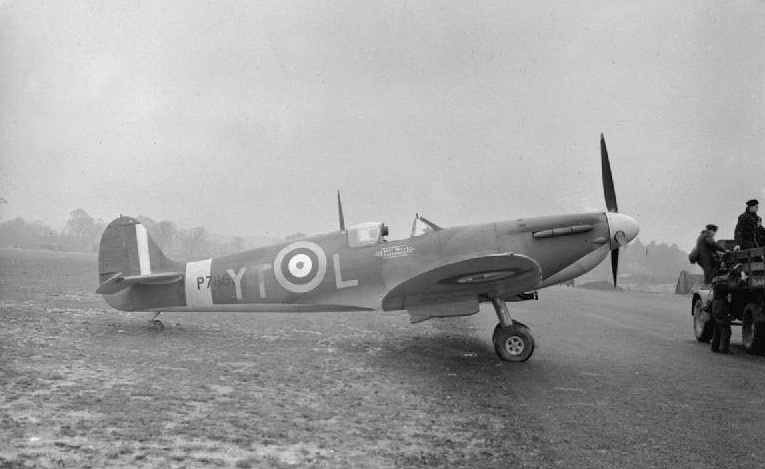
My darling Rose,
It is not yet dawn. I am sitting in the dispersal hut with the rest of the squadron, waiting for the telephone to ring — the call that will send us scrambling into the air. The grass is wet and the mist is low over the airfield. It looks like a painting, Rose. An English watercolour. If I could bottle this light and send it to you, I would.
The smell in here is always the same: engine oil, cigarette smoke, damp wool, and the peculiar sweetness of the grass outside. Biscuit, the squadron dog — a scruffy little terrier with one ear that won’t stand up — is asleep at my feet, twitching as he dreams of chasing rabbits. The men are playing cards. Johnny’s singing “Roll Out the Barrel” again, badly, and everyone is pretending to be annoyed. We are masters of pretending here. We pretend we are not afraid.
But I am afraid, Rose. Not all the time — the fear comes in moments. When the telephone rings. When I see the black specks on the horizon. When I climb through clouds and the world falls away and I remember how small I am. But then I remember your face, the way you looked at me at the station, and the fear becomes something else. It becomes fuel.
Flying is the most beautiful thing I have ever done. The Spitfire is not a machine — she is alive. When I take her up through the clouds and break into sunlight, with the English countryside spread beneath me like a patchwork quilt, I feel something I cannot describe. It is almost worth the terror, for the view. Almost.
If this morning is my last, I want you to know something. I did not fight for kings or countries. I did not fight for flags or speeches. I fought for quiet English things. Rose gardens and pub gardens. Sunday roasts and the way rain smells on warm pavement. The sound of your voice. The way you say my name — “Jimmy” — like it is the only word that matters.
The telephone just rang. The scramble bell will go any second.
I love you. I love you. I love you.
If I don’t come back, tell our children — if we are lucky enough to have them — that their father died looking at the most beautiful sky he had ever seen.
Yours, in this life and whatever comes after, Jimmy
James "Jimmy" Armstrong was born in 1918 in Bristol, the son of a carpenter. He learned to fly at the Bristol Flying School and joined the RAFVR in 1939. Known as "the poet" of 609 Squadron for his letters home describing aerial combat in vivid, romantic prose. He and Rose married in August 1940 — they had just six weeks together before his death. His commanding officer described him as "the finest natural pilot I have ever commanded, and the bravest."
What Happened
Aftermath
Historical Context
Timeline
Britain declares war on Germany. Jimmy joins the RAF Volunteer Reserve.
Jimmy completes flight training and is posted to No. 609 Squadron.
609 Squadron converts to Spitfires. Jimmy writes home about "the most beautiful machine ever built by man."
Jimmy marries Rose in a brief ceremony in Bristol. They have six weeks together.
Battle of Britain Day. Jimmy writes this letter before dawn. He is shot down at 14:23.
Rose receives the letter from Jimmy's commanding officer.
Diana Armstrong is born. Rose names her after the moon — "because he always flew toward it."
Rose dies at 85. The letter is donated to the RAF Museum.
Origin
More from World War II
The Polish Pilot
Squadron Leader Tadeusz Kowalski of 303 Squadron RAF wrote this letter on the eve of the decisive Battle of Britain engagement. He fought for England but dreamed of Poland — and the wife and daughter he left behind in Warsaw.
Tadeusz 'Tadzio' Kowalski → Anna Kowalski
The Norwegian Ski Soldier
Norwegian ski trooper Erik Solberg wrote to his wife Ingrid from a mountain cabin during the Battle of Narvik. His letter was found in the pocket of his white camouflage jacket, stained with snow and blood.
Erik Solberg → Ingrid Solberg
The Diary That Never Stopped
After her RAF pilot husband was shot down over France, Doreen Wright wrote him a letter every single day for three years — 1,095 letters — even after she knew he was dead. None were ever mailed.
Doreen Wright → Gilbert Wright