The Polish Pilot
Moja najdroższa Anno,
I write this letter by the dim light of a hurricane lamp in a wooden hut on a cold English airfield. The fire is low and the men are restless. Tomorrow we go up against Göring’s finest — the whole of England is counting on a handful of Poles, Czechs, Frenchmen, and Brits. It is a strange thing to fight for a country that is not your own. But this island has given me wings, and I will use them.
I do not know if you are alive. I do not know if our little Krysia still laughs the way she did when I lifted her onto my shoulders in the market square. I do not know if our apartment at 12 Mokotowska Street still stands, or if the Germans have taken it. I do not know anything. I am a man who lives between the sky and the earth, suspended in uncertainty.
But I know this: I love you. I loved you the first time I saw you in the park, reading a book with the sun catching your hair. I loved you on our wedding day when you cried and said you were not afraid. I loved you the night I left Warsaw, and I love you now — more than ever, because you are the only constant in a world that has turned to ash.
If I die tomorrow, I die thinking of your face. I die with the taste of Polish bread on my lips — the dark rye bread your mother baked, the one we tore apart with our hands on Sunday mornings. I die with the sound of Krysia’s first word in my ears. She said “tata.” I was the happiest man on earth.
I fight for England, but I dream of Poland. I dream of the Vistula at sunset, of the cobblestones of the Old Town, of the smell of pierogi from the kitchen. When I fly, I look down at the English countryside and pretend it is the Masovian plain. The villages are rounder here, the rivers gentler. But the sky is the same. The sky has no borders.
Tell Krysia that her father died flying. Tell her that the sky over England is the same sky over Warsaw. Tell her I kissed her photograph before every mission, and that I kept a lock of her hair in my flight jacket. Tell her I will watch her from the clouds, always.
If I survive tomorrow — and I intend to, because I have a family waiting for me — I will find my way back to you. I will cross rivers, mountains, and borders. I will walk through a burning Europe if I must. I will come home.
But if I do not, know that I died with your name on my lips and Poland in my heart. The Spitfire is my horse, the sky is my battlefield, and you are my reason.
Do not forget me. But more importantly — live. Live for both of us. And plant something beautiful in the ruins.
I love you. I love you. I love you.
Your Tadzio
Niech żyje Polska. Niech żyje wolność.
What Happened
Aftermath
Historical Context
Timeline
Germany invades Poland. Tadeusz, a Polish Air Force pilot, evacuates his wife and daughter to hiding in Warsaw.
Tadeusz flees to Romania, then France, then England. He is unable to send word to Anna.
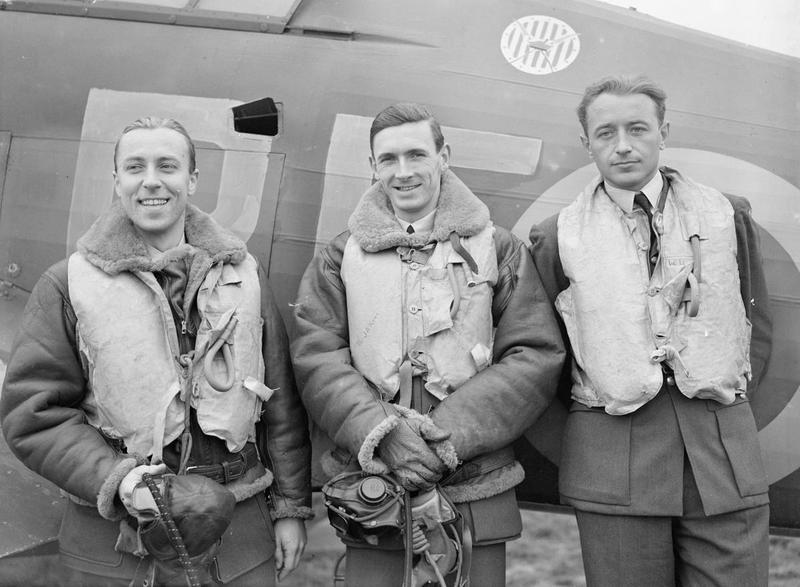
Tadeusz joins No. 303 Squadron RAF, flying Supermarine Spitfires.
On the eve of the decisive battle, Tadeusz writes his letter, not knowing if his family is alive.
The largest German air assault on England. 303 Squadron shoots down 18 confirmed kills. Tadeusz survives.
Tadeusz is killed in a training accident over the English Channel. He is buried in Newark-on-Trent, England.
Anna learns of her husband's death through the Red Cross. She receives his letter months later.
Krysia Kowalski becomes the first woman pilot for LOT Polish Airlines.
Origin
More from World War II
Above the Clouds
Written at dawn on Battle of Britain Day — the decisive air battle over England. Jimmy was shot down hours later. The letter was found in his locker at RAF Middle Wallop.
Flight Lieutenant James 'Jimmy' Armstrong → Rose Armstrong
The Norwegian Ski Soldier
Norwegian ski trooper Erik Solberg wrote to his wife Ingrid from a mountain cabin during the Battle of Narvik. His letter was found in the pocket of his white camouflage jacket, stained with snow and blood.
Erik Solberg → Ingrid Solberg
The Greek Parting
Captain Nikos Stavros of the Greek army wrote to his wife Eleni from the frozen Pindus Mountains, where Greek forces were pushing Mussolini's invasion back into Albania. He was killed a month later.
Nikos Stavros → Eleni Stavros