The Norwegian Ski Soldier
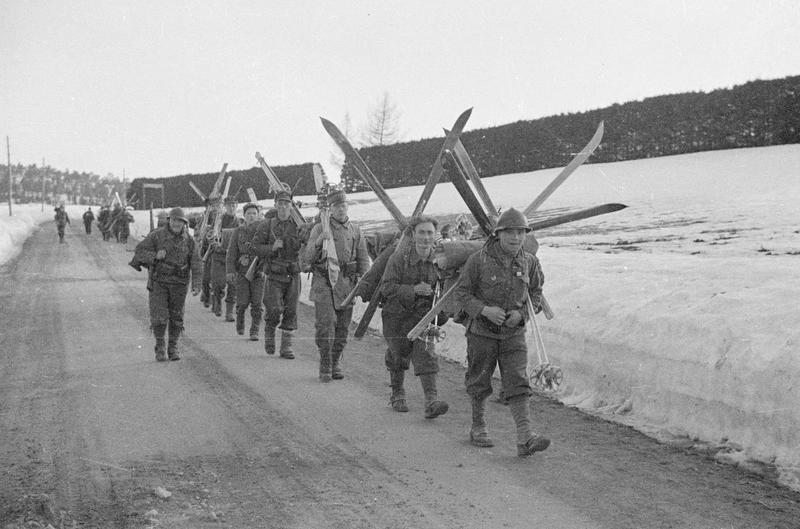
Min elskede Ingrid,
I am writing this in a mountain cabin that smells of pine smoke and wet wool. My skis are propped against the wall, still crusted with ice from this morning’s patrol. The men are asleep in their sleeping bags, their rifles close at hand. Outside, the fjords are beautiful tonight. The water is gray like steel, and the mountains are white with snow. It is strange to think of dying in such a beautiful place.
We move on skis, as our fathers and grandfathers did. The Germans have tanks and trucks and airplanes. We have birchwood and wax and the muscles our mothers gave us. But we know this land. We know the snow, the wind, the way the light falls on the mountains at dusk. They do not. They are invaders in a country they do not understand. And the snow does not forgive.
Today we skied toward the sound of gunfire. It was surreal — the same motion I learned as a boy, gliding across the frozen lake behind my father’s house, but now with bullets whining past. I thought of you. I always think of you.
Do you remember the winter we met? The Christmas market in Oslo, the year the snow came early. You were wearing a red sweater and your cheeks were pink from the cold. You laughed at something I said — I have forgotten what — and I knew, in that moment, that I would spend the rest of my life trying to make you laugh again. I hope I succeeded. I think I did.
If I die, Ingrid, do not grieve in the darkness. Grieve in the sun, in the snow, in the spring when the ice breaks on the fjord and the water runs clear again. Grieve in the way the light falls through the birches in autumn. Grieve in the mountains — they will hold your grief better than any room.
The Northern Lights tonight are the most beautiful I have ever seen. They are green and purple and silver, dancing across the arctic sky like the breath of God. I think they are for you. I think they are telling you that I am all right, that wherever I am, I am watching the same sky you will watch when the war is over.
I have been skiing since I was three years old. My father put me on skis before I could walk properly. We would go out on Sunday mornings, the two of us, across the frozen lake, and he would tell me the names of the mountains. I never imagined I would ski toward gunfire. I never imagined the snow would be red.
But here I am. And if this is my last run, it is a good one. The snow is fast, the air is sharp, and I am fighting for the land I love with the people I love beside me.
Be brave, Ingrid. Be strong. Live well. And when you look at the mountains, know that I am there — in the wind, in the snow, in the spring meltwater that runs down to the sea.
I love you. I have always loved you. I will always love you.
Your Erik
Takk for alt. Thank you for everything.
What Happened
Aftermath
Historical Context
Timeline
Germany invades Norway. Erik, a former national ski champion, reports for duty in white camouflage.
First Naval Battle of Narvik. Erik's unit is deployed to the mountains above the fjord.
Erik writes his letter from a mountain cabin. He describes the beauty of the Northern Lights.
Erik is killed by German artillery near Mount Fagernes. His letter is found in his ski jacket.
Ingrid flees to Sweden with Erik's letter. She will not return for five years.
Ingrid returns to Narvik. The city is in ruins. She rebuilds.
Ingrid dies. The letter hangs above her fireplace, exactly where she placed it fifty years earlier.
Origin
More from World War II
The Polish Pilot
Squadron Leader Tadeusz Kowalski of 303 Squadron RAF wrote this letter on the eve of the decisive Battle of Britain engagement. He fought for England but dreamed of Poland — and the wife and daughter he left behind in Warsaw.
Tadeusz 'Tadzio' Kowalski → Anna Kowalski
Above the Clouds
Written at dawn on Battle of Britain Day — the decisive air battle over England. Jimmy was shot down hours later. The letter was found in his locker at RAF Middle Wallop.
Flight Lieutenant James 'Jimmy' Armstrong → Rose Armstrong
The Greek Parting
Captain Nikos Stavros of the Greek army wrote to his wife Eleni from the frozen Pindus Mountains, where Greek forces were pushing Mussolini's invasion back into Albania. He was killed a month later.
Nikos Stavros → Eleni Stavros