From the Ridge, with Pride
My dearest Eleanor,
I am writing this from the top of the world.
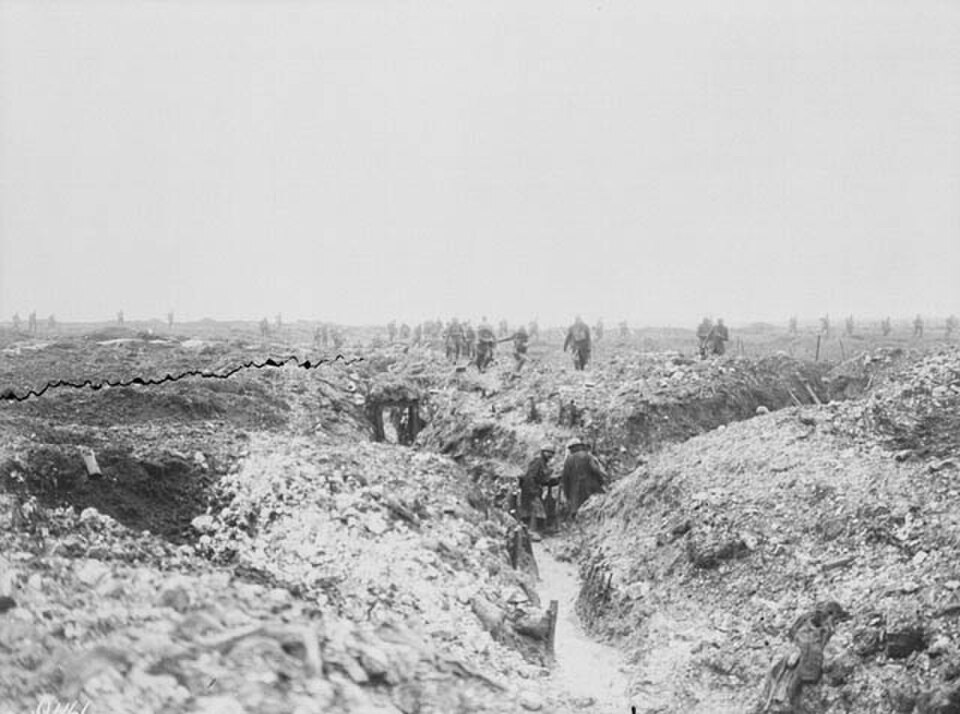
We took the ridge yesterday. The Germans held it for three years — three years, Nell — and we took it in a matter of hours. When we reached the crest, I looked back and saw the whole plain below us, the ruined villages, the roads crawling with our boys, the guns being hauled up. And everywhere, men were cheering. Not a battle cry, but a real cheer. Some of them were crying. I won’t pretend I wasn’t one of them.
The ridge is a terrible place. The French tried and failed. The British tried and failed. But we did it. The Canadians. Our boys from Nova Scotia and Quebec and Ontario and the prairies, all fighting together for the first time. Today, out here on this hill in France, we proved we are our own nation. Not just British colonists. Not a footnote in someone else’s empire. Canadians.
You should have seen the tunnels, Nell. The engineers spent months digging them through the chalk — whole underground cities with electric lights and mess halls and hospitals. We rehearsed the attack over and over on a mock battlefield behind the lines, marching through tape-marked lanes until every man knew his job in the dark. It was that training that got us up the ridge. That, and something else. Something I can’t quite name.
I am sitting in a German officer’s dugout as I write. He left in a hurry — there’s a half-eaten biscuit on the table and a photograph of a woman pinned to the wall. She looks like someone’s mother. I suppose she is. The Germans are not the monsters the papers describe. They are men like us, scared and far from home. But today we were better.
I think of you constantly. Of the sea air in Halifax. Of the autumn colours on the hills — the maples and birches. I think of our wedding day, how you laughed when I stepped on your dress. That laugh is what I carry with me into every fight. The memory of it is worth more than any medal.
I love you, Nell. I love you more than I have words to say.
Yours forever, Tommy
P.S. — If I don’t come home, tell our children — the ones we haven’t had yet — that their father fought on Vimy Ridge and was proud to be Canadian. Tell them I died on high ground, looking east.
The letter is written in blue ink on a single sheet of lined paper torn from a notebook. There are smudges — possibly mud, possibly tears. The paper smells faintly of earth and cordite. It was found in the breast pocket of Tommy's tunic.
What Happened
Aftermath
Historical Context
Timeline
Britain declares war. Canada is automatically at war. Tommy enlists in Halifax.
Tommy marries Eleanor in Halifax. They have three days together before he ships out.
Tommy arrives in France with the 3rd Canadian Division, 58th Battalion.
Tommy fights at the Somme. He survives a gas attack that kills half his platoon.
The Battle of Vimy Ridge begins at 5:30 AM. The Canadian Corps takes the ridge by midday.
Tommy writes this letter from a captured German dugout on the ridge.
Tommy is killed by a sniper while consolidating the captured position.
Eleanor receives the letter in Halifax, along with the chaplain's notification.
The Vimy Memorial is unveiled by King Edward VIII. Eleanor attends the ceremony.
Origin
More from World War I
The Baby I Never Held
Italian soldier Marco Nardi's wife gave birth to their son while he was at the front. He received a photograph but never held the baby. This letter was found on his body after the Austro-German breakthrough at Caporetto.
Marco Nardi → Elena Nardi
The Last Night Before the War
A French farmer conscripted in August 1914 writes to his wife of two months on the eve of the First Battle of the Marne. He died the next day.
Antoine Roussel → Colette Roussel
The Belgian Last Stand
A Belgian soldier writes to his wife from the Yser River, describing the desperate flooding of the land to stop the German advance. 'We are drowning our country to save it.' He died three days later.
Pieter Van Der Waals → Liesbeth Van Der Waals