The Pianist of the Ghetto
My beloved Leah,
Today I played Chopin for the last time.
The piano is in the basement of 34 Muranowska Street, in a bunker built beneath what was once a pharmacist’s shop. It is an old upright, chipped and warped from the damp, missing two keys — the G above middle C and one of the black keys, I forget which. It does not matter. The Germans outside the wall cannot hear the music. They can only hear the bullets.
I played the Nocturne in C-sharp minor. Do you remember the first time you heard me play it? It was at the Conservatory, 1935. You were in the third row, wearing a blue dress. Afterward you came to the stage and told me I had made you cry. I knew then that I would marry you. I knew it the way I know the opening bars of Beethoven’s Fifth — inevitable, perfect, written in the fabric of the world.
The walls of this bunker shake when the bombs fall. Dust rains from the ceiling. The people around me are terrified — mothers holding children, old men reciting psalms, young fighters checking their weapons. But when I play, they are quiet. For a few minutes, they are not in the ghetto. They are somewhere else. Somewhere with trees and sunlight and hope.
They have given me a pistol. I do not know how to use it. My hands know the curve of a piano key, not the weight of a trigger. But I will learn. Today I will fight. Tonight I may die. But I wanted to write to you first, to tell you that I am not afraid.
I am not afraid because I have loved you. I have loved you through war and starvation and separation. I have loved you in the ghetto and I will love you beyond it. Death is nothing — a door, a silence, a breath held too long. But love is the music that plays on after the pianist has stopped.
If music is the language of the soul, then this letter is my song for you.
I remember the taste of your lips. Sweet, like the honey cake your mother made before the war. I remember the sound of your laughter — how it filled a room, how it made strangers turn their heads and smile. I remember the way you traced my collarbone with your finger on quiet mornings, as if memorizing me. I remember everything, Leah. Everything.
When you read this — and I pray you do — know that my last thought was not of the Germans, the bullets, or the fire. It was of your face. It was of your hands in mine. It was of the life we had, brief and beautiful and unbreakable.
I am not afraid. I have Beethoven in my heart and your name on my lips. That is enough for any man.
Do not grieve too long. Find life again, if you can. Play the piano for me — the Nocturne — and I will hear it wherever I am.
Yours in this world and the next,
Samuel
Ani ma’amin — I believe. I believe in the coming of the Messiah. I believe in justice. I believe in you.
What Happened
Aftermath
Historical Context
Timeline
The Warsaw Ghetto is sealed. Samuel and Leah Rosenberg are forced inside with 400,000 others.
The Great Deportation begins. 300,000 Jews are sent to Treblinka. Samuel finds work in a German factory.
First armed resistance in the ghetto. Samuel joins the Jewish Combat Organization (ŻOB).
Leah is smuggled out of the ghetto to the Aryan side. Samuel insists she go. It is the last time they see each other.
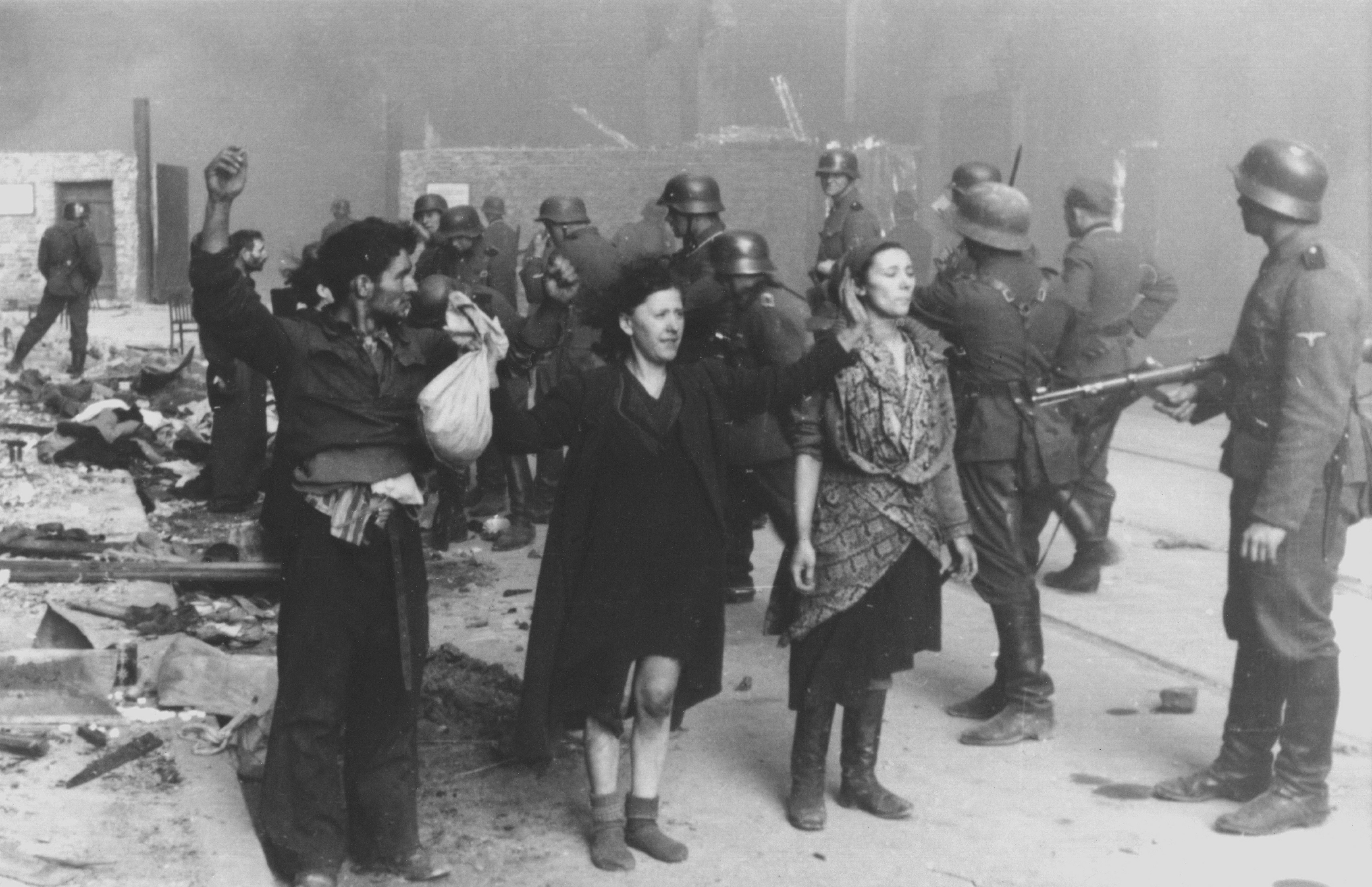
The Warsaw Ghetto Uprising begins. Samuel plays Chopin for the last time. He writes his letter. He is killed.
Leah recovers the letter from the rubble. She opens the jar and reads his words for the first time.
Leah immigrates to the newly established State of Israel. She donates the letter to Yad Vashem in 1965.
Leah dies in Tel Aviv. Her gravestone reads: 'She carried his song home.'
Origin
More from World War II
The Polish Pilot
Squadron Leader Tadeusz Kowalski of 303 Squadron RAF wrote this letter on the eve of the decisive Battle of Britain engagement. He fought for England but dreamed of Poland — and the wife and daughter he left behind in Warsaw.
Tadeusz 'Tadzio' Kowalski → Anna Kowalski
From the Rubble
Smuggled out of the burning Warsaw Ghetto during the uprising, this letter was written by an 18-year-old Jewish fighter to his younger sister — the only surviving member of their family.
David (Dawid) Lerner → Rachel Lerner
The Resistance Courier
Smuggled out of a Gestapo prison by a guard who pitied him, this letter is the final testament of a 22-year-old Resistance courier executed three days after his capture.
Étienne Mercier → Céleste Mercier