The Piper of the Scots
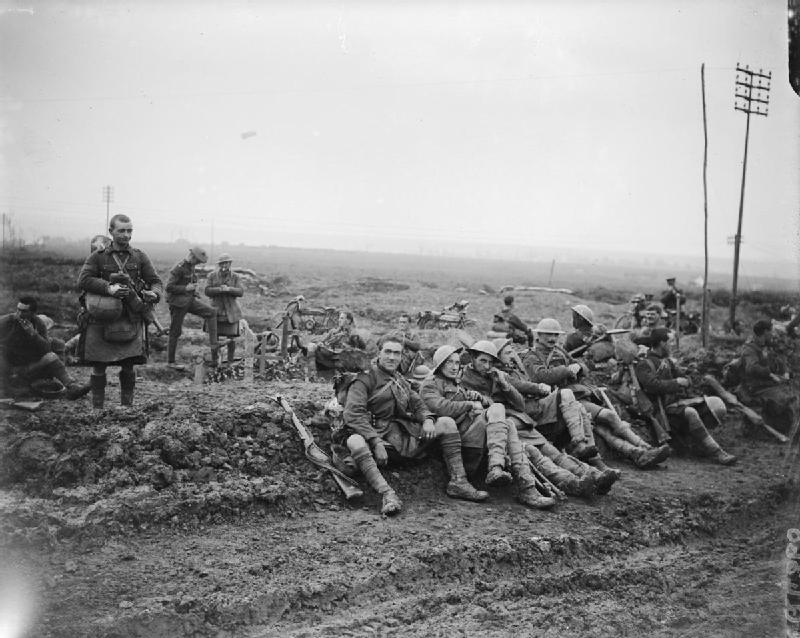
My beloved Fiona,
I am writing this by the light of a candle that will not last the night, somewhere in a trench that smells of chalk and cordite and fear. The chaplain has just passed among us, offering blessings. The officers are checking their watches. Tomorrow at dawn we go over the top, and I want you to know — I want my son or daughter to know — that their father went into battle singing.
I have my pipes with me, wrapped in oilcloth to keep them dry. The lads say I am mad to carry them into the assault, that they will slow me down, that the Germans will hear me and know where to aim. But I do not care, Fiona. I did not join the Highlanders to hide. I joined them to play. And if I am to die tomorrow, I will die with music in my lungs and the sound of the glens pouring out of my heart.
The mist here in France reminds me of the mornings at home — the way the cloud would settle in the valley below our cottage, turning the world soft and grey and secret. Do you remember how we used to walk in it, you and I, with the sheep bells tinkling in the distance and the smell of peat smoke hanging in the air? I close my eyes and I am there. I am standing on the hill behind the croft, watching the sun burn through the mist, feeling your hand in mine. I have that hand with me now, Fiona. I hold it in the dark when the guns are loudest. It is the only thing that keeps me from falling apart.
I think about the baby a great deal. I do not even know if it is a boy or a girl, but I already love it with a ferocity that surprises me. I lie awake at night and imagine its face, its tiny fingers, the sound of its crying in the cottage. I imagine teaching it to play the pipes, to read the Gaelic, to know the names of the hills and the burns and the secret places where the deer hide. I imagine growing old with you, watching our child become a person, building a life out of the love we have for each other.
Do not let my death — if death comes — poison that future. Do not let it turn you bitter, my love. I know you. I know the fire in you, the strength that I have always admired and leaned upon. Use that strength to live. Use it to raise our child with joy, not sorrow. Tell our child about me — not the soldier, but the man. The man who loved the sound of the pipes at dawn, who could not pass a shearing shed without stopping to help, who wept at your beauty on our wedding day and thanked God for the gift of you.
The whinnies have started up — the great guns behind us. They do not stop. The ground trembles beneath my feet. The Germans will be answering soon, and the sky will turn red, and I will go forward with my pipes and my love for you, and I will play until I cannot play any more.
I will play for you tomorrow, Fiona. If you listen closely at dawn, you will hear me across the sea. The pipes carry, you know. My father used to say that you could hear a good piper from one end of the glen to the other. Perhaps you will hear me all the way from France to the Highlands. Perhaps the wind will carry the sound of “The Flowers of the Forest” to your window, and you will know that I am thinking of you, that I am playing for you, that I am loving you across the distance.
If I fall, I fall on the earth of a foreign country. But my heart — my heart is in the Highlands, with you, where it has always been.
I will see you again, Fiona. In this life or the next.
Your Angus
P.S. — I have asked Corporal Murray to send you my pipes if I do not come back. They are not worth much, but they have been my companions since I was twelve years old. Sell them if you need the money, or keep them for the child. Give them to our son if he has the music in him. And tell him — tell him that his father went into battle singing, and that he was not afraid, because he carried the love of his wife and his country and his God in his heart, and that was enough.
What Happened
Aftermath
Historical Context
Timeline
Britain declares war on Germany. Angus, a crofter's son and village piper, enlists in the Cameron Highlanders.
Angus marries Fiona MacLeod in the village church. They have one week together before he ships out to France.
Angus writes to Fiona with the news that she is expecting a child. He is overjoyed.
The night before the Battle of Loos. Angus writes this letter in the trenches, knowing the assault is imminent.
The Battle of Loos begins at dawn. Angus goes over the top playing "The Flowers of the Forest." He is killed by machine-gun fire.
Fiona receives the letter and Angus's shattered bagpipes, delivered by a comrade who recovered them from the field.
Fiona gives birth to a son. She names him Angus.
Fiona dies at 81. Young Angus plays "The Flowers of the Forest" at her funeral.
The letter and the pipes are donated to the Cameron Highlanders Museum in Inverness.
Origin
More from World War I
If I Should Fall
A French soldier's letter to his sweetheart, written before the Second Battle of Ypres. Jean-Luc was a poet before the war.
Jean-Luc Moreau → Claire Dubois
The French Jewish Soldier
A French soldier of Jewish faith from Alsace writes to his wife on the morning of the Second Battle of Artois, blending French and Hebrew in his final farewell.
David Lévy → Rachel Lévy
The Serbian Soldier's Promise
Written during the Great Retreat across Albania, this frozen letter was found in Zoran's hand after he succumbed to hypothermia and starvation in the Albanian mountains.
Zoran Petrović → Jelena Petrović